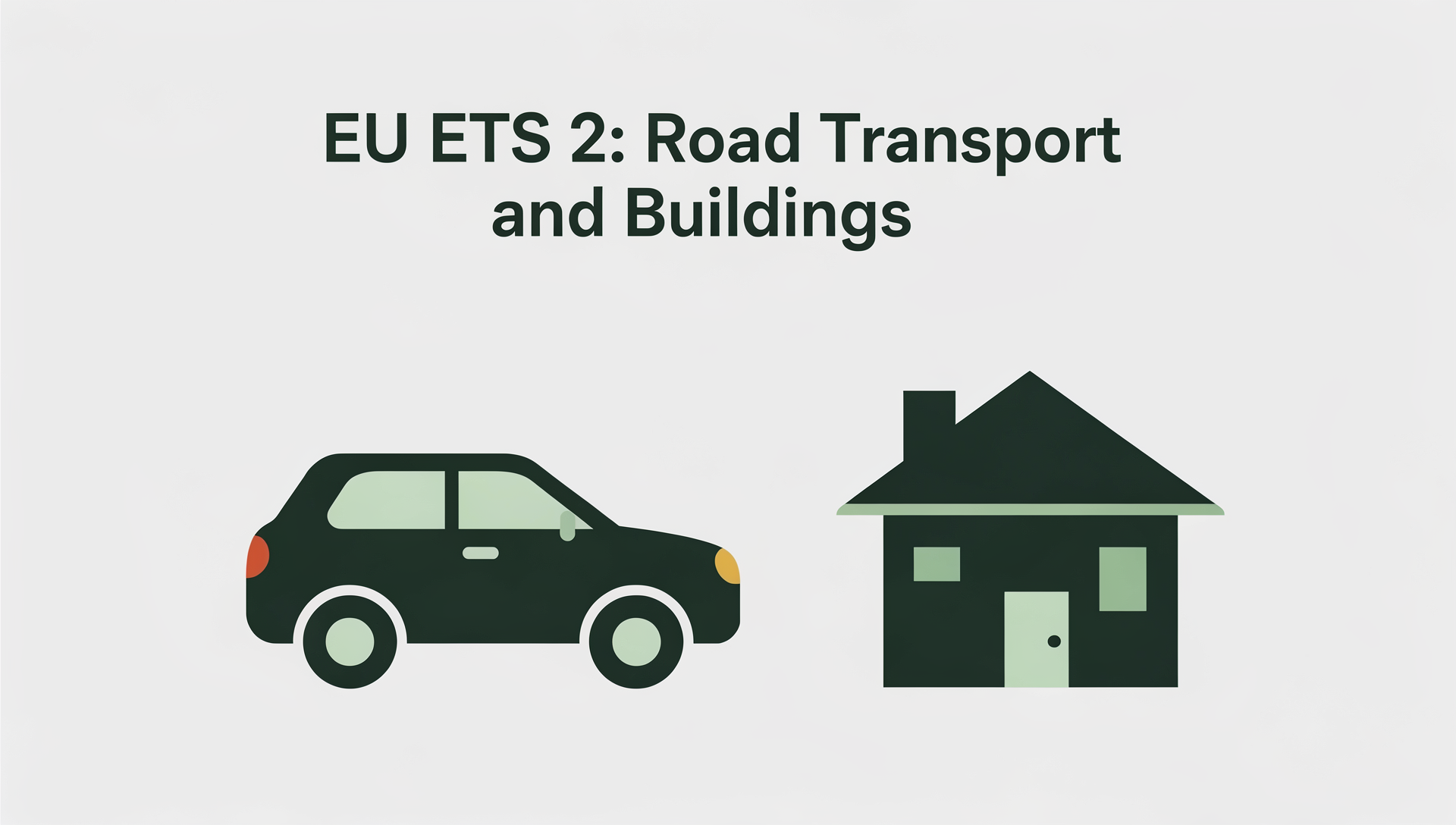
EU ETS 2: Road Transport and Buildings
I. Definition
EU ETS 2 is a European carbon pricing system that applies to road transport and buildings.
It makes companies pay for the CO₂ emissions linked to fuels used for driving vehicles and heating buildings.
In simple words:
if a fuel creates emissions, those emissions have a cost.
This cost is calculated using carbon allowances, which represent the right to emit a certain amount of CO₂.
The objective of EU ETS 2 is to reduce emissions by pushing the market toward cleaner energy and better efficiency.
II. Context
The European Union already has a carbon market called the EU ETS.
This first system mainly covers power plants and large industrial sites.
However, a large share of emissions comes from daily activities like driving cars or heating homes.
This is why EU ETS 2 was created.
It extends carbon pricing to fuels used in road transport and buildings, two sectors that were not fully covered before.
Under EU ETS 2, fuel suppliers are responsible.
They must calculate the emissions generated by the fuels they sell.
Then, they must buy carbon allowances to cover these emissions.
This system is designed to work gradually.
It includes safeguards to limit price shocks and social mechanisms to support households.
But its efficiency depends on one key element: accurate and verifiable emissions data.
III. Why it matters
At Orizscore, we believe EU ETS 2 changes the role of data.
Emissions are no longer just environmental indicators. They become financial and regulatory proof.
If emissions data is wrong, the cost is wrong. If reporting is unclear, trust is lost.
And without trust, carbon markets cannot work.
The real challenge is proof.
Who can prove emissions are correct? Who can prove reductions are real? Who can prove compliance in a transparent way?
This is why reliability, traceability, and clarity are essential.
Companies that can structure, document, and explain their data will be more resilient.
In a regulated world, trusted carbon evidence is not optional anymore.
IV. Related terms
- EU ETS: Emissions Trading System
https://www.orizscore.com/blogs/eu-ets-emissions-trading-system - CBAM: Carbon Border Adjustment Mechanism
https://www.orizscore.com/blogs/cbam-carbon-border-adjustment-mechanism
V. Example
A company supplies natural gas used to heat residential buildings.
This gas generates CO₂ emissions when burned.
Under EU ETS 2, the supplier must:
- Measure the emissions linked to the gas sold.
- Report these emissions accurately.
- Buy carbon allowances to cover them.
If the supplier shifts to lower-carbon energy or improves efficiency, emissions decrease.
Lower emissions mean fewer allowances to buy.
Clear measurement and solid proof directly reduce cost and compliance risk.